Boarding a plane recently, I found my seat occupied by a dog. When I asked the owner to move her pet, she became indignant. The dog had a name and was more than just a pet. It was one of those moments when you just immediately knew this person hated people with as much passion as she loved her pet and the burden of my existence on this flight was overwhelming the two of them. Now I’d like to think I am quite a tolerant person and I really tried to ignore how the animal was suffering rampant flatulence from the cabin pressure, but when the passenger started to feed her pet from her mouth, I asked the flight attendant to see if I could move seats.
Don’t get me wrong. I love animals and grew up with beautiful German Shepherds on our family farm. But things are starting to get out of hand when furry creatures pushed in prams around shopping malls and restaurants are so easily humanised while those dreadful homo sapiens are barely tolerated. “Therapy pets” is a sound concept that had been quickly abused and extended to the ridiculous. In many cases, they are being used for mental health comfort under conditions that border on animal cruelty. Maybe a tax on pets will re-establish some common sense.
Redefining Pets
People keeping pets as a compensation or therapy tool have redefined what a pet is, redefined what a nuclear family consists of, and have redefined how the non-pet world should consider them. During the COVID lockdowns, the extension of therapy pets became excessive. The BirthStrike generation is spending big on the must-have pet accessories (like the €600 Yorkie strollers and the €200 snuggle kangaroo petholders). And then there is the selection of fine foods, all packaged in individual servings and transported through a global (pet) food chain.
For many young single professionals, a pet is no longer just a part of the family. It (sorry for the offensive pronoun) has become the family. Pet humanisation has normalised. During the US election campaign, a nerve was struck when J.D. Vance made a derogatory reference to the abundance of “childless cat ladies”. Even Taylor Swift had to weigh in.
But there are serious demographic concerns with the replacement of the nuclear family with a fur-lined family. Cats will not support people struggling with health issues in their senior years. Nor will they contribute to the pension system of aging populations (unless they are taxed). Do we really want to welcome redefining the nuclear family with a pet at the core?
Fahrenheit K9
There are over 165 million dogs and cats kept as household pets in the United States and the number is growing exponentially. I won’t even get into the number of small mammals, birds, fish and reptiles pet owners keep (a lot more than I had expected are keeping reptiles). There are more than one billion pets globally.
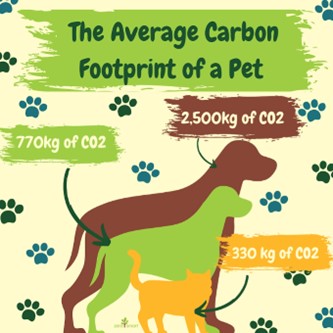
Pets eat a lot of meat. A dog, for example, emits considerably more CO2 than a car (with large dogs emitting twice the amount of average road vehicles). It doesn’t help that in the UK, for example, more than 50% of the dogs are obese and thus consuming more than the average. 20% of global production of meat and fish go to feeding dogs and cats. I could go on, but I think you get the picture: pet ownership has become a ticking ecological timebomb. On the other hand, people who choose to keep a dog and then nourish it on a vegan or insect diet are just cruel ideologues and should not be allowed to own pets.
The CO2 emissions also have to consider the pet food chain, production, packaging and transportation, as well as the pet clothing, toys, accessories and medical/veterinary impact (pets are living longer and needing more medical attention). The global pet industry is estimated to be worth around half a trillion dollars by 2030 with pet food consumption reaching $137 billion. Is it any wonder that companies like General Mills are investing massive amounts into this sector.
The environmental impact of pets is enormous and if we are looking at serious measures to control carbon emissions through financial mechanisms, then the first area we need to consider is not energy, not agriculture, not transportation, but the pet industry. To fight climate change, we need to disincentivise pet ownership. We need to tax pets.
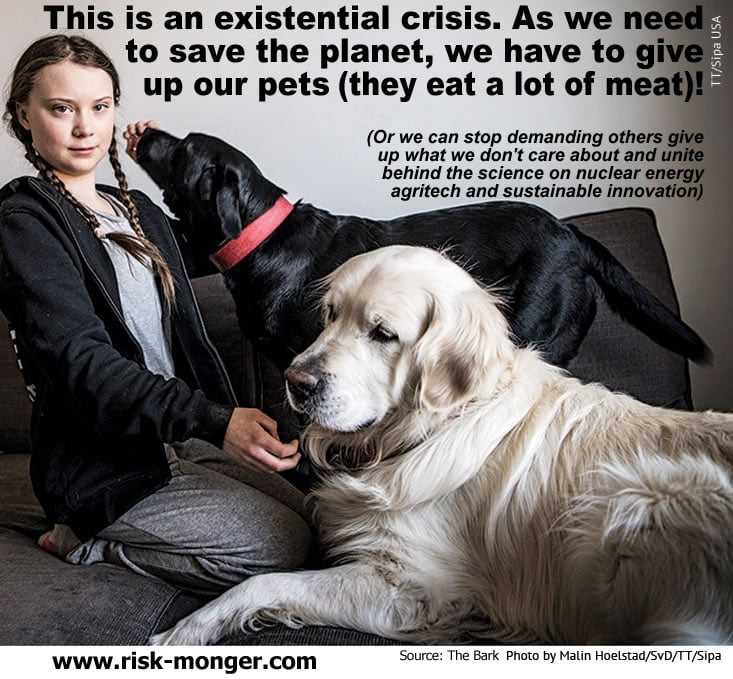
A tax will allow people to consider the impact of their decision and reconsider whether taking ownership of a pet is a good idea. It will generate state revenue and, importantly, it will contribute, fractionally, to offsetting the CO2 emissions they produce. It can be framed positively. Rather than diverting development funds from homeless relief or women empowerment programmes, climate funding can rely on revenues generated from pet taxation. I would be OK with that. Some cities and states do have a dog tax but that is more for population monitoring and control.
Would Greenpeace propose orchestrating a “transition” away from pet ownership? Come on now. Think of all of those childless cat ladies who regularly donate to the NGO. Rather, NGOs are campaigning to reduce the human population.
COP the Pooch
At the UNFCCC COP29 Climate Conference in Baku, Azerbaijan, the focus was about how (and how much) the developed rich nations should pay to the developing countries for climate adaptation, including the so-called UN Fund for Responding to Loss and Damage. The total cost the UN was predicting these emerging economies would need for climate adaptation and mitigation measures was around $1.3 trillion per year by 2030. But why stop there? The Independent High-Level Expert Group on Climate Finance’s third report (IHLEG) claims the needs are closer to $2.4 trillion (for the developing world ex-China). But since money is free now (and Nicholas Stern was involved in the IHLEG), why stop there? In order for the developing world to have a “just transition” (and please define “just”), the annual toll according to the IHLEG is closer to $7 to 8.1 trillion by 2035 (per year). The COP29 negotiators have promised $300 billion (most of which had already been earmarked for other non-climate development projects). What’s a couple more trillion dollars among friends (per year)???
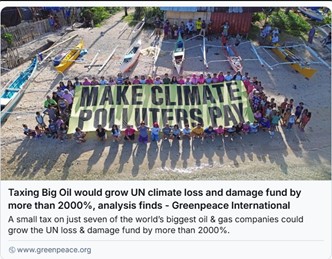
Greenpeace, as part of their “Make Polluters Pay” campaign, have proposed that an additional tax on the seven largest oil companies would be sufficient to cover the funds required twice over. Really now.
This seems too easy, and like everything Greenpeace generates, it is overly simplified, feel-good pulp. Like it or not, the world still relies largely on fossil fuels to heat their homes, drive their cars and go to work. And if we dared to be realistic, they will continue to do so for the foreseeable future. There is no point blaming the fossil fuel companies on the “if, when and how” they had considered the threat of fossil fuels to the environment; governments had the same information and failed to regulate for over three decades. These companies, today, are trying to provide energy to consumers at a cost they are able to afford. If food and energy prices spike, as they did in 2022 after the Russian invasion of Ukraine, the public suffers (and as 2024 demonstrated, if the public suffers, they remember that when they vote). Taxing fossil fuel companies will put more pain on consumers who, for the coming decade, at least, have no other choice for their essential energy needs.
People, however, do have a choice about whether or not to own pets. Those who cannot afford groceries or heat their homes don’t suddenly decide to go out and acquire a pet. Owning a pet, feeding it gourmet meat products and buying it unnecessary accessories is a luxury; heating your home during a cold winter is not. Having to choose which of these to tax to pay for some (likely poorly managed) climate fund is a bit of a no-brainer.
So the Risk-Monger Expert Group on Climate Finance is preparing its own report (let’s see if I’ll be invited to COP30 in Rio to present our findings). On the back of an envelope, I have generated a few simple revenue calculations from a global pet tax to be dedicated to ensuring a just climate transition for developing and emerging market countries (including, apparently, China, a major pet food exporter).
One billion dogs and cats: $100 flat tax = $100 billion
$500 billion spent on pets: 10% luxury tax = $50 billion

This is clearly not an oppressive tax compared to what anti-industry campaigners want to impose on fossil fuel companies. Other pets could also be taxed and scalable tax schemes could be introduced on types of pets, locations, non-byproduct pet food, but these simple calculations show that taxing pets for their CO2 emissions could cover 50% of the UN’s climate finance amount agreed to at COP29. And if such taxation measures would deter pet ownership, this would be good news for the climate since these revenues do not nearly cover the true impact of pet ownership on the environment.
But before we give anyone at the UN more money, we need to first find out what happened to the $41 billion in climate finance funds the World Bank can’t seem to account for.
Enjoyed this read (free with no ads)? Support The Risk-Monger via Patreon.
Become a Gold-Monger patron for 5 € / $ per month and get David’s newsletter.
 The Risk-Monger
Excellent idea. Seeing the huge pet food lorries on the road in the UK I’ve often wondered about the climate impact. Back in the ’60s, where I grew up there were maybe one or two families in our street with a dog, now it seems almost every family has at least one. We often go for a 3 mile circular walk, and it’s not unusual to see 20 – 25 dogs there.
LikeLiked by 1 person
Accurate observations Mr Monger of Risk. “Companion animals” are fur children, in the First World leading a pampered indolent pointless existence, a dog’s life, often distressed at being abandoned and incarcerated, barking unto exhaustion while irresponsible owners work. The animals are indulged and untrained, contributing little when owners are otherwise occupied, one reason for the popularity of the Dogfather, of Dogs Behaving Badly. Concerning felines, here in Australia they are relentless predators of native wildlife and should be supervised and prevented from roaming and hunting. GPS enabled geofence collars with App might be a solution. Apparently in London UK there are 2000 cats per square kilometre, doubt they earn their keep hunting rats and mice, much. 🐁
LikeLiked by 1 person
Huff Post (for the 20% of meat and fish production is estimated to be consumed by pets) is not good enough – they are journalists who have not themselves provided references for the so-called estimate. I expect better. It is likely that the bulk of meat and fish petfood is byproduct. This being the case, the main effect of it is to keep the costs down to the consumers of the primary cuts, because the byproduct can be sold for petfood, but the ‘20%’ figure won’t be the motivating one. I agree with the tenor of this article but would like to have references to original work on petfood production estimates and percentage of it as by-product, for example. No one could quote the 20% estimate on the basis of a Huff Post article.
LikeLike