Georges Clemenceau once said war was too important to be left to the generals. Today, in Brussels, agriculture is too important to be left to the farmers.
This ignorance of farming and farmers has gone on for so long in Brussels that it seems like the experts involved in the farming debates have little idea about what farming actually is. They all agree that there are important problems with agriculture and food, but their definitions and solutions all missed one important point: farmers
On April 1, 2025, some of the world’s leading food and agricultural experts met in Brussels for their annual Forum for the Future of Agriculture (FFA). There were experts on the five conference panels from the tech sector, finance, government, NGOs, research, the academe, and the agritechnology and food industries. They all agreed that the agri-food sector is in crisis and in need of transition or “transformation” – the titled theme of the event.
Everyone at the conference had a definition of what farming is and how the “problem” of agriculture could be resolved. The bigger problem is the difference in how each of these expert groups considered what farming is.
- The tech people stressed the importance of data to farming,
- the finance experts spoke only of markets and prices,
- governments on regulations and subsidies,
- climate experts on how agricultural carbon taxes are needed,
- activists on how farming has to be local, natural, small and deindustrialized,
- food brands on how ESG (still) would reduce inputs and restore the environment with improved ecological farming,
- food manufacturers look at how logistics, transport and processing technologies would solve the farming problem,
- industry is developing drones and precision ag tools to walk the rows,
- researchers think their emerging technologies will solve agriculture’s problems (at least the ones the activists and regulators have identified).
But nobody at this large event thought it necessary to ask the farmers what they felt they needed.
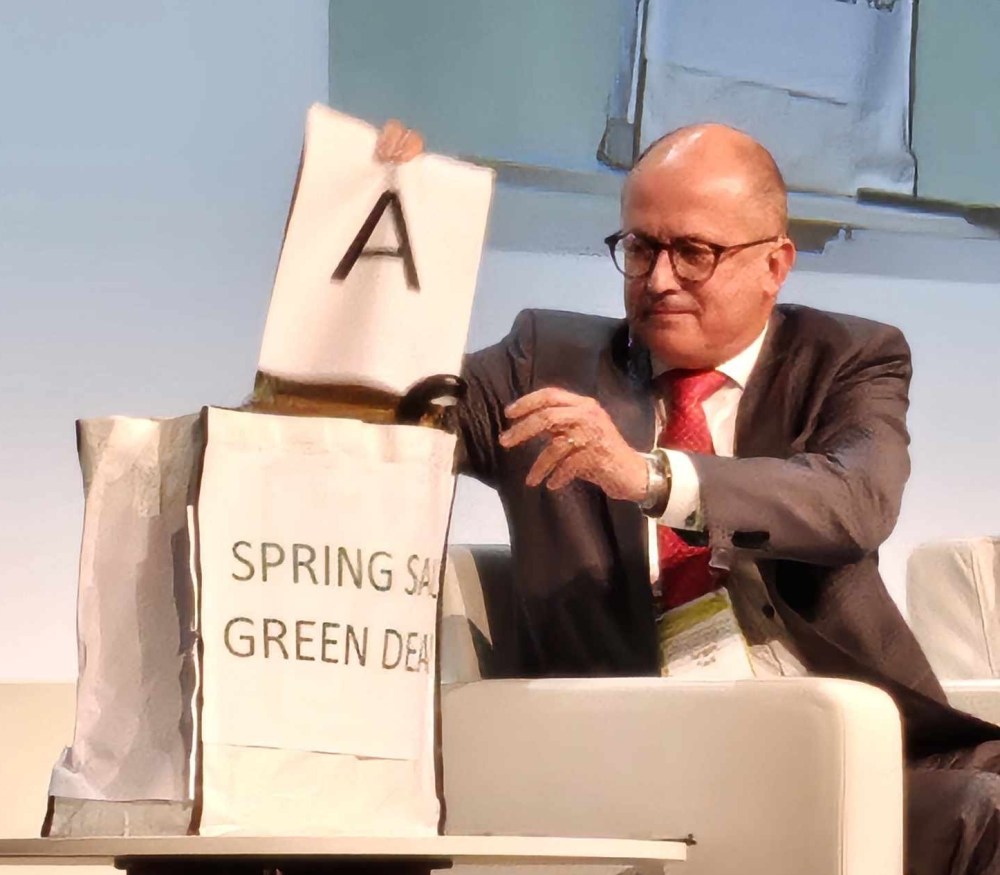
The curiosity here is that the public does not identify food and agriculture by any of the perspectives from these self-important experts who are certain their work provides the answers to farming. The public perceives their food as coming from farmers and at that, a certain simplified perception of what farming is. They trust the person they meet and the food they buy at a Farmer’s Market (less so further down the value chain).
It seems a bit simplistic to ask to define farming or consider who a farmer is … until it had become clear that those who tasked themselves with solving the claimed problems facing agriculture do not agree on what farming is or what farmers actually need.
Missing the Point
Without a focus on farmers, many points made at the Forum for the Future of Agriculture missed the mark. A year ago, farmers were protesting outside of the European Parliament while the FFA event took place, and no one in the conference room was addressing their concerns. The EU’s Farm2Fork strategy was not even mentioned at the conference today. One year ago, it was still being saluted.
Journalists moderating the event, like Stephen Sackur, continually tried to return to talk about trade wars, Trump and conflict (between countries, between stakeholders and between industry and consumers). The experts wanted to speak about yields, soil health and carbon. The farmers in the audience though wanted to speak about prices, markets and how dry the late winter has been. Nobody seemed concerned with how food security could be improved in developing countries.
There are several cases where the parade of agricultural specialists missed the point on what was actually important for farming. For example, many academics and scientists on the panels underlined the importance of soil health for farming stressing conservation ag techniques, including crop rotations. It has often been said that farmers should plan a two to three year crop rotation schedule to protect their soil from degradation. But recently we learnt that this planting season, US farmers are changing their crop plans at the last minute. A large number have switched their rotations from soy to maize in order to ensure they have local markets to sell their crops, not three years from now, but in six months. While academics cite their lecture notes and regulators go on about CO2 emissions, the looming trade wars and tariff spats have made farmer survival more important than soil or environmental health.
A Single Definition of Farming?
Another example of where these Brussels-based farm experts seem to misunderstand what farming is about, is on what exactly farmers are supposed to be growing. Farming bureaucrats tend to think everyone should grow the same things, much like that globalized Big Mac. A calorie is a calorie, right? I spend four to five months of the year in the Philippines where I am still learning how to cook local vegetables along traditional lines. The tastes, nutrients, traditions and values of food cannot be homogenized just to make some academic’s life easier.
A vegetable farmer in a tropical climate is not like a Dutch dairy farmer, an African subsistence farmer or an American grain farmer. Their food is different, their culture is different, their climate and soil is different, their technologies and labour demands are different … They are different farmers. We have as much to learn about what makes farmers distinct as what values and practices they share.
Viorel Gutu, the FAO Assistant Director-General, made a chilling remark at the FFA conference that what was needed was better education of farmers. Maybe Viorel needs some better education as his perception of farmers is limited to his Central Asian post.
In order to understand what farming is, those making decisions would have to learn to listen more and talk less. I thought this would be possible in a post-Timmermans world, but perhaps I was too naive.
Bring Farmers Back Into the Future of Agriculture
The Forum for the Future of Agriculture had panels on geopolitics, on financing the transition, transforming agriculture, climate tools and sustainability – all buzzwords in Brussels, but far from the reality of what goes on in the fields, the rural communities and the demands of bringing a crop to fruition.
Then, at the conference, someone mentioned the word “simplification” and some bureaucratic report on the vision for agriculture and food and everyone started nodding intensely.
Wouldn’t it be nice if there were an FFA panel made up of real farmers who talked about what they needed? I would gladly host a panel next year with some very interesting farmers I know who are doing incredible things. But I suppose in this arrogant world of experts, producing food is far too important to be left to the humble farmer.
—-
Enjoyed this read (free with no ads)? Support The Risk-Monger via Patreon.
Become a Gold-Monger patron for 5 € / $ per month and get David’s newsletter.
 The Risk-Monger
Hello, about your comment on Peter Marks :
https://www.drvinayprasad.com/p/the-same-media-that-lied-about-all
LikeLike
Thank you … nothing surprises me anymore
LikeLike