Key Points to Part 1:
- IARC has done three monographs on talc, and while the evolution of the research evidence was not significantly different, the results of these monographs were.
- The 2019 update to the IARC Preamble essentially moved the goalposts on how its monograph working groups should make conclusions on carcinogenicity.
- Two months after the 2019 Preamble update, the IARC Advisory Board determined that talc was once again a priority substance for a further monograph.
- In the 2010 monograph, the findings of a 1993 talc animal study were considered inadequate and irrelevant. In the 2025 monograph, following the 2019 Preamble update, this same study was influential in the talc working group’s decision.
- Without significant new research compared to the 1987 and 2010 talc monographs, IARC determined in 2025 that talc without asbestiform fibres was probably carcinogenic (Group 2A).
The International Agency for Research on Cancer (IARC) produced three monographs on talc, in 1987, 2010 and 2025. The distinctions between these three monographs reflect the evolution in the IARC evaluation process more than new research evidence and leave some curious questions on the scientific principles under which this WHO agency operates.
This is the first of a three-part series on IARC’s talc journey. As an introduction, it will outline the three monographs and examine how and why they differ. Part Two will look at the views of the dissenting voices on the third talc monograph working group and how the agency managed the issues panel members had. The third part will question the motives behind the methodology shift and ask if IARC has become more political than scientific.
This exposé intends to show how the IARC evaluation process evolved to become more litigation-friendly and political during a time when Predatort interest in talc lawsuits has been expanding.
The questions this three-part exposé will need to be asking include:
- How did the three IARC talc monographs move from inadequate information (Group 3) to possible (Group 2B) to probable carcinogenic (Group 2A)?
- Did talc suddenly become carcinogenic?
- Were there new significant studies?
- How does IARC manage dissenting views on its working groups?
- Did IARC change their methodology (move the goalposts) to deliver a “probably carcinogenic” verdict?
As IARC’s reputation has been severely damaged over the last decade, this exposé may help to demonstrate how their hazard identification methodology has been polluted by special interests and politics.
About Talc
Talc is a naturally occurring mineral known for its smoothness and softness. Talc and asbestos are both silicate minerals often found in the same geological deposits, suggesting a risk of cross-contamination during mining. Industries have assured that their talc has been asbestos-free since the 1970s but recent Predatort lawsuits have tried to cast doubt on that assertion.
Most will know talc in its fine powder form as talcum powder, but it has a very wide number of uses, including many cosmetics and personal care products, in pharmaceutics as fillers, carriers and lubricants, in food as anti-caking and polishing agents and many industrial uses from ceramics to paints, plastics and paper. Talc is also used in arts and crafts products like chalk, sculpture materials and crayons.
Talc is a very widely used mineral, but IARC’s focus has been on human exposure via talcum powder, to the point that the agency has done three monographs focusing on this single personal care application.
Talc Monograph 42 (1987)
IARC’s first monograph on talc, published in 1987 in a series on silica and some silicates, distinguished between talc with and without asbestiform fibres. This monograph had two conclusions:
- There was inadequate evidence for carcinogenicity with respect to talc not containing asbestiform fibres (Group 3).
- There was sufficient evidence for carcinogenicity for talc containing asbestiform fibres (Group 1).
This became the baseline understanding on the hazards of talc, with the wide range of industrial and consumer applications falling under the IARC Group 3 classification (for talc not containing asbestiform fibres).
Talc Monograph 93 (2010)
IARC’s second monograph on talc, published in 2010, evaluated talc as part of a broader volume including carbon black and titanium dioxide. The monograph kept the same two talc distinctions, with talc containing asbestiform fibres remaining classified as Group 1 (carcinogenic to humans). However, the difference in this second monograph was that the IARC working group assessed inhalation versus perineal application differently, concluding that inhaled talc without asbestiform fibres was Group 3 (not classifiable) whereas it concluded there was limited evidence for carcinogenicity (Group 2B) for the perineal use of talc-based body powder.
This 2B conclusion, with limited evidence for talc-based powder, was due to:
- retrospective case-control studies were possibly skewed by recall bias and confounding variables while not showing consistent dose-response relationships;
- the first large prospective cohort study (the Nurses’ Health Study) did not show any statistically significant positive association between talc use and ovarian cancer;
- there was a possibility of confounding due to potential contamination of the talc used in the studies.
On animal evidence, the IARC working group found that the 1993 National Toxicology Program (NTP) animal study on talc was inadequate. It lacked relevance due to the fact that the adrenal gland tumours seen in the animal study may have been due in part to the excess dosage used, and the type of rats used in the study (which often spontaneously generate these types of tumours). It is interesting to note that while the 2010 IARC working group rejected the 1993 NTP animal study, the 2025 talc monograph relied on this same study to deliver a different conclusion.
Talc Monograph 136 (2025)
In the 2025 IARC monograph on talc (and acrylonitrile), they no longer took the two-talc distinction: with and without asbestiform fibres. The Working Group only examined talc without asbestiform fibres, and unlike the previous two talc monographs, concluded Group 2A – probably carcinogenic to humans.
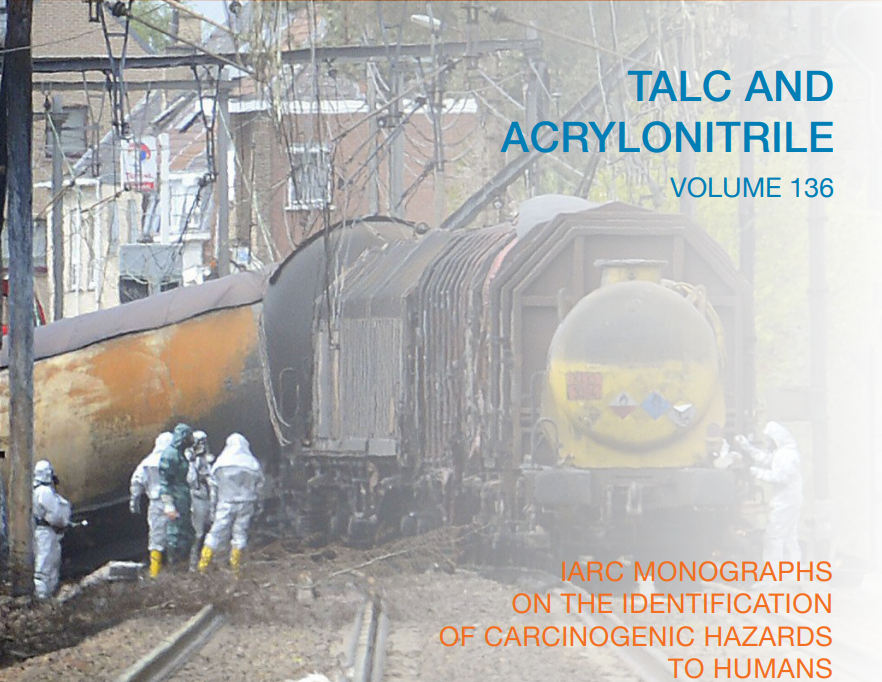
If the research and evidence had not significantly changed, what caused the shift in IARC’s decisions allowing for the reclassification of talc as probably carcinogenic to humans? The first point to consider is how IARC amended its Preamble in 2019.
IARC’s Preamble is the guiding document for the IARC Monographs programme, outlining the scientific principles, objectives, and procedures for evaluating carcinogenic hazards. Regarding the evolution of the talc monographs, there were several important updates in 2019 that influenced the change in IARC’s 2025 carcinogenicity determination for talc.
- The 2019 update to the Preamble codified the “10 Key Characteristics of Carcinogens” framework from a paper that was published in 2015 by a large number of Ramazzini / IARC insiders. The Key Characteristics are essentially a checklist of indicators that could be linked to cancers. The 2025 IARC talc Working Group identified two Key Characteristics linking talc to cancers, being used to justify its conclusion of probably carcinogenic (Group 2A). Given how this approach is controversial (many characteristics are not necessarily linked to cancer) this conclusion was far from unanimous in the IARC working group. More on that in Part 2 of this exposé.
- Importantly, IARC’s update of the 2019 Preamble redefined the conditions for the classification of Group 2A. A substance or agent can be considered as probably carcinogenic to humans if a working group finds two of the following:
- If there is limited evidence of carcinogenicity in humans,
- If there is sufficient evidence of carcinogenicity in experimental animals (note that “sufficient evidence” has been redefined and widened to include, for example, single studies),
- If the substance exhibits evidence of several of the Ten Key Characteristics.
On top of two Key Characteristics, the 2025 IARC talc working group concluded that the 1993 NTP animal study, which the 2010 IARC Working Group considered as inadequate and lacking relevance, suddenly was considered, under the 2019 Preamble update, to provide sufficient evidence of carcinogenicity. Working group members in 2025 were told to reevaluate the 1993 NTP animal study through the lens of the Preamble update, where a once irrelevant study was suddenly made relevant.
The 2010 IARC classification of talc without asbestiform fibres as Group 3 (inadequate evidence of carcinogenicity) in general with Group 2B (limited evidence of perineal cancers) was reclassified, with the magic wand of the IARC 2019 Preamble update, to Group 2A (probably carcinogenic).
This is how IARC does science. When they didn’t like the results, they amended the methodology (ie, moved the goalposts).
A Rush to Justice?
Shortly after the Preamble update was published in 2019, IARC’s Advisory Board met to nominate future candidate monograph substances, including a third monograph on talc (with high priority). It should also not go unnoticed that in 2019, lawsuits were starting to gather speed against Johnson & Johnson linking their talcum powder brands to perineal and ovarian cancers. At that time there were no scientific agencies or significant publications providing that clear link. More on that in Part 3 of this analysis.
Part Two of this SlimeGate analysis of the IARC science behind talc will look at how not all of the IARC 2025 talc working group members were willing to roll over and accept the faulty methodology, deceptive tactics and bad activist science that was being imposed upon them.
Since 2018, SlimeGate has been one of the few documents, a living research text, trying to expose the corruption and lies behind the litigation industry. If you enjoyed this read (free with no ads) or the entire SlimeGate exposé, why not support The Risk-Monger via Patreon? Become a Gold-Monger patron from 5 € / $ per month and get David’s newsletter.
 The Risk-Monger
2 Comments Add yours